Affordability in housing
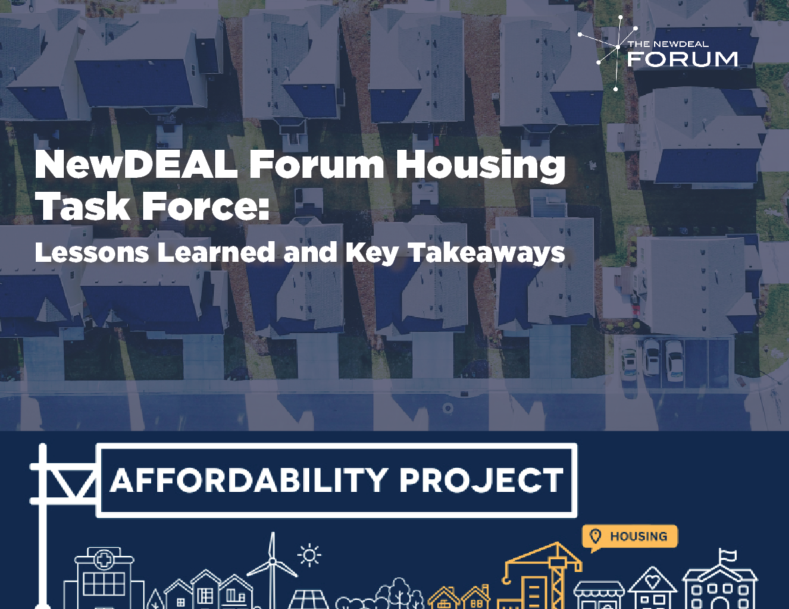
Housing affordability remains one of the most urgent challenges facing Americans. From rural communities to growing metros, hardworking families are feeling the strain of rising rents, higher mortgage payments, and a housing supply that simply has not kept up with demand.
Across the country, NewDEAL Leaders are testing bold ideas, modernizing outdated systems, and proving that progress is possible when leaders are willing to act.
NewDEAL Leaders who have participated in the NewDEAL Forum’s Housing Task Force are setting a blueprint. They are encouraging the construction of more housing units, employing innovative policies and novel building methods to increase housing stock, and tearing down red tape so that more people can find the affordable housing they need.
Over the past year, through both virtual and in-person convenings, the following guiding principles for this work have emerged:
Increasing housing supply is critical to addressing affordability;
Housing should be centered in all policy discussion;
Success comes from an all-of-the-above strategy that encourages innovation and incorporates housing into broader policy goals; and
Meeting the scale of the challenge requires building coalitions across sectors and levels of government.
Housing task force: lessons learned and key takeaways
Affordability in child Care
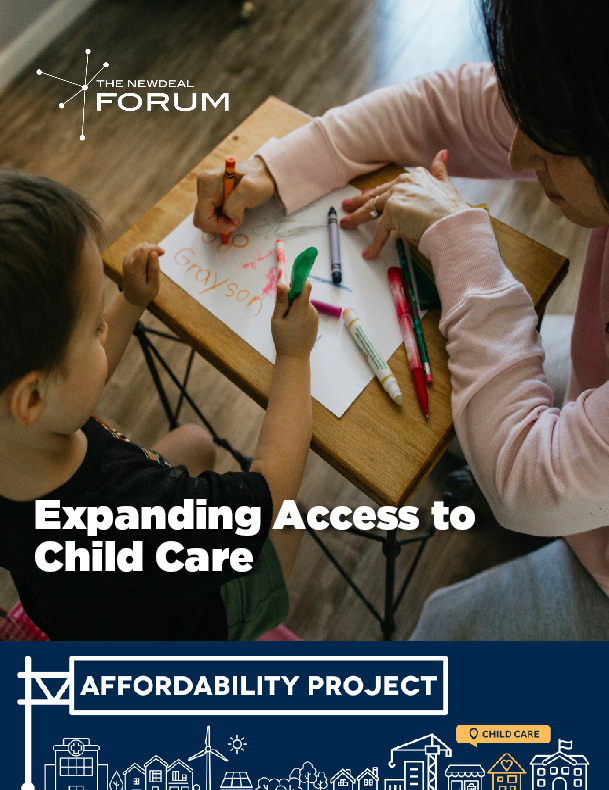
Across the country, families, employers, and communities are confronting a child care system in crisis. Parents cannot afford the care they need to remain in the workforce; providers struggle to pay competitive wages; and entire communities are constrained by shortages that create persistent “child care deserts.”
As federal action stalls and the market remains fundamentally broken, state and local leaders are stepping up with bold, durable solutions. And while these solutions include additional funding, they cannot be solely focused on funding. There must be regulatory changes to make care more affordable and accessible. Opportunities to improve access and affordability exist all across the country, in any political environment.
The path forward requires rethinking child care as essential economic infrastructure and investing in both affordability and supply. At the 2025 NewDEAL Leaders Annual Conference, speakers zeroed in on child care. The conversation included five key lessons with actionable lessons for policymakers:
Treat Child Care as Economic Infrastructure and Confront the “Broken Market”
Successful Models Are Emerging
Reduce Regulatory Barriers to Expand Capacity
Pay Child Care Providers as Professionals
Use Data to Target Investments
expanding access to child care
Affordability in clean energy
At the 2025 Leaders Conference, the NewDEAL Forum continued its work on advancing policies and opportunities for clean energy that lowers its costs and strengthens resiliency.
Across the country, families and businesses are impacted by rising electricity prices, aging infrastructure, and mounting barriers to deploying renewable energy at the scale needed to meet demand. State and local leaders can confront these challenges by:
Integrating affordability into clean energy goals,
Removing state and local non-cost barriers that delay project, and
Strengthening transparency and public trust.
Our leaders have laid out actionable steps for state and local elected officials to protect and expand health care access and restore trust in public health institutions.
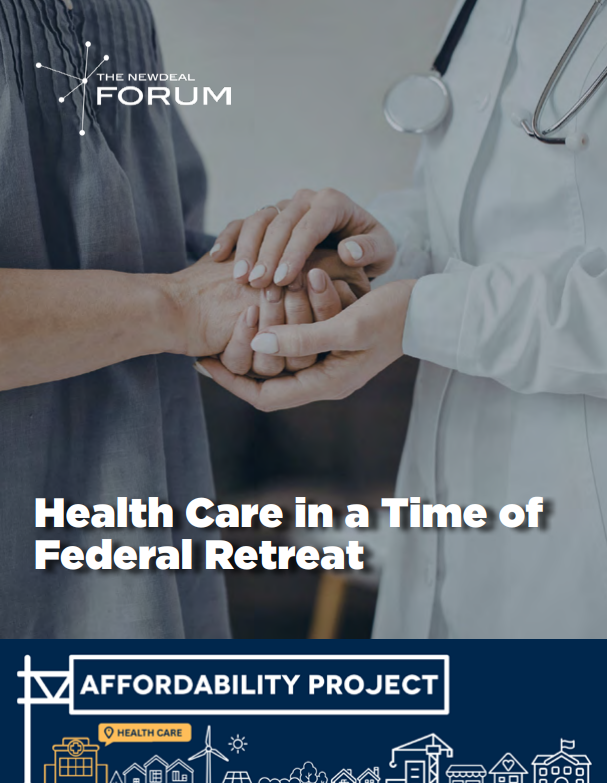
Affordability in Health Care
As President Trump’s One Big Beautiful Bill ushers in deep cuts to access as well as uncertainty for patients and providers, state and local governments will be under additional pressure to support their constituents.
At the 2025 Leaders Conference, several panels of elected officials and health-care experts underscored the urgent need for pragmatic, sustainable solutions from states and localities. The key takeaways from these discussion were:
Federal Policy Is Creating Instability
Local Innovation Can Fill Gaps
Encourage Innovation and Shared Services
Our leaders have laid out actionable steps for state and local elected officials to protect and expand health care access and restore trust in public health institutions.